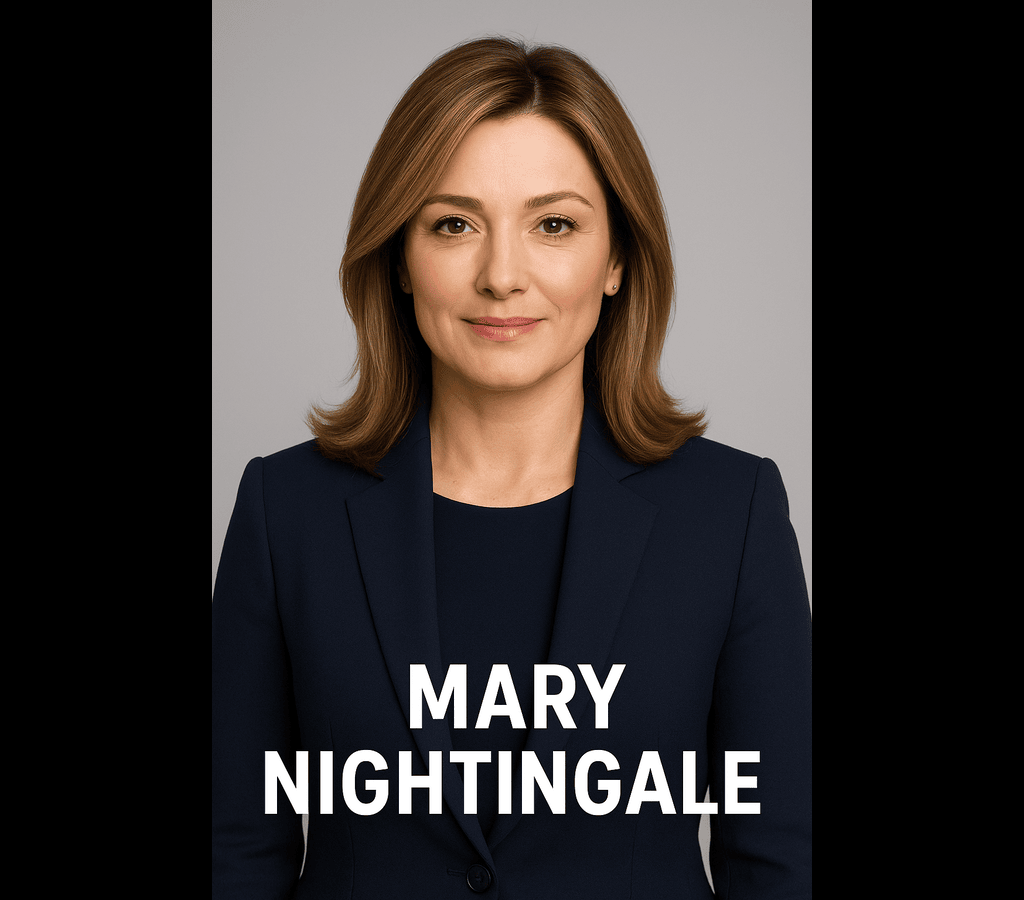
Mary Nightingale has been the main presenter of ITV Evening News for over two decades. Most people see her as steady, calm, and confident. But in the early 2000s, she went through a health problem that nearly took her off the air. It wasn’t something dramatic or sensational, but it was serious enough to threaten her career. The issue was her throat—her voice started to fail her.
The First Signs
It began in 2001, not long after she became the lead presenter for ITV Evening News. Her voice started cracking during live broadcasts. Sometimes it just faded in the middle of a sentence. At points, she had to stop before the programme finished. For a journalist who relied on her voice more than anything else, it was alarming.
This wasn’t just a mild irritation. In live television, there’s no second take. The audience sees and hears everything in real time. If your voice disappears, it’s noticed instantly.
Why She Stayed Quiet
She chose not to make it public right away. For about 15 months she dealt with the problem privately, while still appearing on TV almost every night. Behind the scenes, she went through several medical tests. Doctors wanted to rule out anything life-threatening, especially throat cancer.
Those tests came back clear, which was a relief. But it also meant no clear answers. She had to keep working without knowing what was actually wrong.
What Doctors Believed
By 2002, when the problem was acknowledged publicly, it was still being described as a “mystery condition.” There wasn’t a label to attach to it. The best medical opinion at the time was that it came from stress and vocal strain.
That made sense. Nightly live broadcasting is high-pressure. Presenters speak for long periods, keeping their tone firm and steady, often late into the evening. It can wear down the throat and vocal cords quickly, especially under stress.
Effect on Her Career
During that period, her work was affected. On air, her voice sometimes failed mid-sentence. Off air, ITV had to consider what to do if she couldn’t continue. For any broadcaster, that’s a frightening situation—your job depends on being able to speak clearly.
ITV, however, supported her. Instead of replacing her, they adjusted her schedule and gave her time to recover. That backing made it possible for her to continue in her role.
Recovery Process
Recovery was not instant. She had to change how she worked and looked after herself.
- Resting her voice: Limiting unnecessary speaking outside of work.
- Hydration: Keeping the vocal cords lubricated at all times.
- Therapy and training: Working with professionals to adjust how she spoke on air.
- Reducing stress: Managing pressure both at work and in personal life.
- ITV’s support: Having her employer back her rather than push her aside.
Gradually, the symptoms eased. She regained her voice and her confidence on air.
Why Her Story Matters
This story matters because it shows the hidden strain of live news. Viewers see a calm face and a steady voice, but the work can put real physical pressure on the body. For presenters, the voice isn’t just part of the job—it is the job.
It also shows how she handled it. She didn’t exaggerate, didn’t turn it into publicity. She managed it quietly, spoke about it when necessary, and carried on with professionalism.
What We Can Learn
There are some practical takeaways from Mary Nightingale’s illness:
- Don’t ignore symptoms. Her voice problems were early warnings. Ignoring them could have led to permanent damage.
- Stress affects the body. It isn’t only mental. Stress can physically show up in the throat, stomach, or elsewhere.
- Employer support is important. ITV giving her time and space made recovery possible.
- Health before image. Professionals often try to “power through,” but her case showed that rest and care matter more.
Where She Is Today
More than 20 years later, Mary Nightingale is still at ITV. She’s now one of the longest-serving women in UK television news. Her voice is strong, her delivery clear, and her authority intact. Many viewers today probably don’t even know she once faced an illness that could have ended her career.
The experience clearly shaped her, though. It taught her how to protect her health and how to balance the demands of her role with self-care.
FAQs
Did Mary Nightingale ever have cancer?
No. She was tested for throat cancer, but every test came back negative.
What was her illness exactly?
It was never given a formal diagnosis. The symptoms were traced to stress and vocal strain.
Did she step away from ITV?
She adjusted her workload and rested, but she was never permanently replaced.
How did the public respond?
When the story came out in 2002, people supported her and respected the way she handled it.
Has the issue returned?
There’s no evidence of ongoing illness. She continues to present ITV Evening News.
Conclusion
Mary Nightingale’s illness in the early 2000s shows that even highly visible professionals face health struggles behind the scenes. Her voice problems could have ended her career, but with the right care, adjustments, and support, she recovered. Today she remains one of the most trusted figures on British television news.
Author Bio
Jordon writes about media, public figures, and health-related topics. His focus is on clear, factual accounts written in a natural, human style.