Health
Hakini Mudra Benefits: Discover Its Effects on Focus, Memory, and Mental Wellness

Explore Hakini Mudra benefits for focus, memory, mental clarity, relaxation, and mindful living with this easy beginner-friendly guide.
Table of Contents
Introduction
In a world filled with notifications, deadlines, and endless distractions, maintaining a steady mind can feel like a challenge. Hakini Mudra benefits are traditionally linked with mental clarity, focus, and better awareness during quiet practices. This simple hand gesture brings your fingertips together while encouraging calm breathing and inward attention. Many people use it during meditation or yoga as a gentle way to settle the mind.
Traditional teachings also connect Hakini Mudra with memory and concentration. While modern research on Hakini Mudra itself remains limited, mindfulness and breathing practices may support overall mental wellness. Let’s explore how this ancient gesture works and how you can practice it safely.
What Is Hakini Mudra? Meaning, Sanskrit Name, and Significance

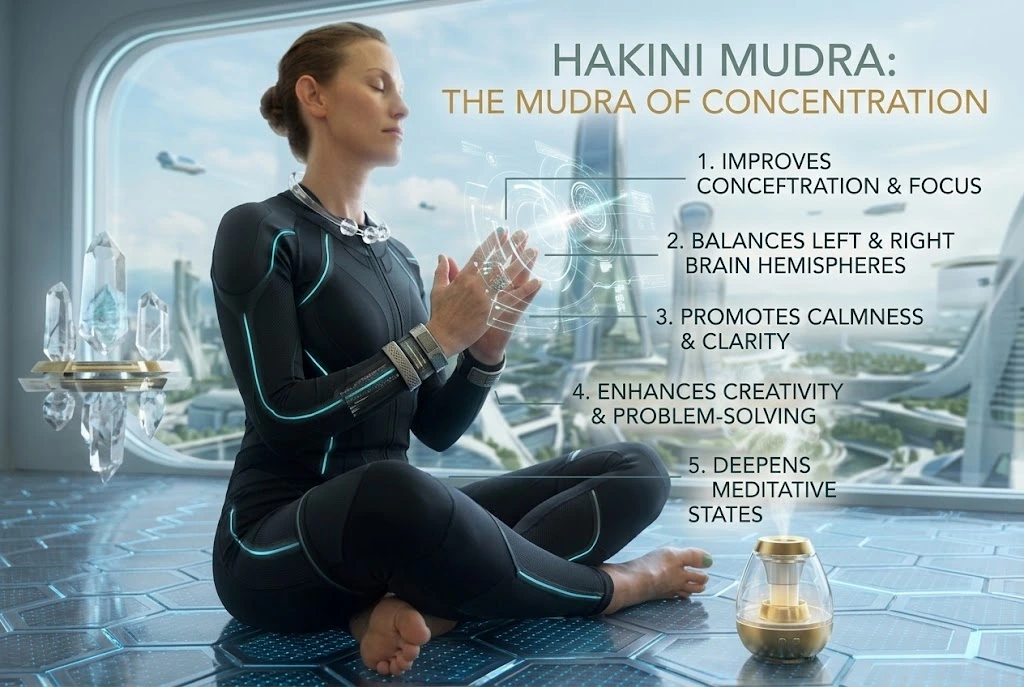
Hakini Mudra is a hand gesture used in traditional yoga and meditation practices. Its name connects with the Hindu goddess Hakini, who symbolizes power, concentration, and intuition in common yogic descriptions. Practitioners often call it the Mudra of the Mind because they associate it with awareness and mental steadiness.
The gesture looks simple. You bring the fingertips of both hands together while keeping the palms slightly apart. Traditional yoga philosophy describes this arrangement as supporting energy flow, prana, and life force energy. These ideas belong to yogic philosophy and shouldn’t be confused with proven neurological mechanisms.
Hakini Mudra Meaning and Sanskrit Connection
The traditional meaning centers on mental control and awareness. The hand position gives you a physical anchor for attention while breathing quietly. That anchor can make it easier to return to the present moment when your thoughts wander.
Hakini Mudra Benefits: How It May Support Focus, Memory, and Mental Clarity
The most interesting Hakini Mudra benefits relate to the way the practice combines a precise hand position with deliberate attention. It may become a useful mindfulness ritual for concentration, memory, and cognitive function. Yet research has studied mindfulness broadly rather than proving Hakini Mudra alone produces these effects.
Traditional sources also associate the mudra with memory retention, mental sharpness, decision-making, and creativity. NDTV makes similar claims, including improved problem-solving skills and reduced mental fatigue. These claims are best presented as traditional or potential wellness benefits, not guaranteed outcomes.
| Potential area | What the practice may offer | Evidence perspective |
|---|---|---|
| Focus | A physical anchor for attention | Mindfulness research offers some support |
| Memory | A traditional association with recall | Hakini-specific evidence remains limited |
| Stress relief | A calming breathing ritual | Mindfulness research supports stress-related benefits |
| Creativity | Quiet space for reflective thinking | Direct Hakini evidence is limited |
| Mental well-being | A simple mindfulness routine | Broader meditation research is relevant |
Hakini Mudra for Focus, Memory, and Mental Wellness
For students and professionals, the real value may come from creating a deliberate pause. Sitting quietly and following your breath can reduce distractions. Research on mindfulness interventions has found small-to-moderate improvements in several cognitive areas, although results vary by outcome.
How to Do Hakini Mudra: Step-by-Step Instructions
Learning how to perform Hakini Mudra takes only a few moments. Sit comfortably with your spine naturally upright. Bring both hands toward your chest or upper abdomen. Then touch each fingertip gently to its corresponding fingertip on the opposite hand, leaving your palms slightly separated.
Next, relax your shoulders and face. Close your eyes if that feels comfortable. Take slow breaths and place your attention on breathing or a simple intention. NDTV suggests practicing for five to ten minutes daily. You can start shorter if you’re new to mindfulness.
Hakini Mudra Hand Position
The fingers should meet gently rather than press hard. Think of the fingertips as lightly touching rather than gripping. If your wrists or fingers feel strained, loosen the position or rest your hands comfortably.
Hakini Mudra Breathing and Breath Awareness Techniques
Breathing can turn a simple hand gesture into a more focused practice. Try deep breathing without forcing large breaths. Let your inhalation remain smooth. Then allow a comfortable exhalation. Mindful breathing gives your attention something steady to follow when thoughts become noisy.
Traditional descriptions often connect Hakini Mudra with calming the nervous system, relaxation, and improved oxygen supply to the brain. That last claim shouldn’t be treated as a proven Hakini-specific mechanism. Instead, view slower breathing as a practical relaxation tool that can support a calmer state.
A Simple Breathing Technique for Hakini Mudra
Keep your breathing natural and comfortable. Notice the air entering and leaving your nose. If your attention drifts, gently return to the breath. There’s no need to force a particular rhythm or hold your breath.
Preparatory Poses and Practices Before Hakini Mudra
You don’t need an elaborate yoga session before practicing Hakini Mudra. A comfortable seated position works well. You can sit cross-legged on the floor, use a meditation cushion, or simply sit in a sturdy chair with both feet supported.
A few gentle shoulder rolls and wrist movements can reduce stiffness. Then settle your body and take several quiet breaths. This preparation can make the transition into relaxation and mindfulness feel smoother, especially after hours at a desk.
Simple Yoga Preparation Before Hakini Mudra
If you already practice yoga, place Hakini Mudra near the end of a gentle sequence. Your body may feel more settled after movement. However, preparation isn’t mandatory. Comfort matters more than performing a complicated routine.
Hakini Mudra Variations and Different Ways to Practice It
Hakini Mudra doesn’t require one special location or elaborate setup. You can practice while sitting on the floor, resting in a chair, or preparing for meditation. The essential feature remains the gentle connection between corresponding fingertips.
You can also pair the gesture with quiet reflection, breathing, or a short mindfulness session. Traditional teachings describe different uses for mudras, while modern practice often adapts them to daily routines. The best variation is the one you can perform comfortably and consistently.
Hakini Mudra During Meditation
During meditation, let the hand position become a quiet physical reminder. When thoughts appear, notice them without chasing them. Then return your attention to your breath, body, or chosen meditation object.
Common Mistakes to Avoid When Practicing Hakini Mudra
One common mistake is pressing the fingertips together too firmly. The gesture shouldn’t create pain or tension. Another is forcing the spine into a rigid position. Instead, aim for relaxed uprightness. Your shoulders should remain soft, and your jaw shouldn’t clench.
Another issue involves unrealistic expectations. Hakini Mudra isn’t a shortcut to instant brainpower or perfect concentration. Claims about directly activating brain activity or balancing the brain hemispheres need stronger evidence. Broader meditation research is promising but doesn’t prove those specific Hakini effects.
Breathing and Focus Mistakes
Avoid forcing your breathing or becoming frustrated whenever your mind wanders. Attention naturally shifts. Each gentle return to the breath becomes part of the practice.
When and Why to Practice Hakini Mudra
Timing depends on your routine. Morning practice can create a calm beginning. A short midday session may provide a mental pause between demanding tasks. Evening practice can help you transition away from screens and daily emotional stress.
You might also use it before studying, writing, planning, or other focused work. Traditional descriptions associate Hakini Mudra with logical thinking, creative thinking, and intuition. These associations can make the practice appealing when you want a deliberate moment for reflection.
Hakini Mudra for a Mental Reset
Imagine stepping away from a noisy office for five quiet minutes. You sit, connect your fingertips, and follow your breathing. That small ritual can create psychological space, even if the mudra itself isn’t responsible for every perceived benefit.
Who Should Practice Hakini Mudra? Precautions and Contraindications
Hakini Mudra is generally a gentle practice because it doesn’t demand strenuous movement. Still, your comfort comes first. Anyone with hand, finger, wrist, or joint discomfort should modify the position rather than forcing the fingertips together.
People managing anxiety, neurological conditions, chronic pain, or other health concerns shouldn’t use the mudra as a replacement for professional care. If a practice causes pain, dizziness, breathing difficulty, or unusual symptoms, stop. For medical questions, seek advice from a qualified healthcare professional.
When to Modify or Stop Hakini Mudra
A mild fingertip connection shouldn’t hurt. Release the gesture if your hands become numb, painful, or unusually tense. The same principle applies to breathing. Keep it natural rather than pushing yourself to take excessively deep breaths.
How to Incorporate Hakini Mudra Into Your Daily Yoga Practice
Consistency matters more than making the routine complicated. You could practice for five minutes after waking, during a work break, or before bedtime. Pairing Hakini Mudra with breathing or meditation can make the habit easier to remember.
For overall wellness, think of the mudra as one small piece of a larger routine. Sleep, movement, nutritious food, social connection, and appropriate healthcare matter too. That broader approach supports holistic wellness without placing unrealistic expectations on one ancient practice.
A 5-Minute Hakini Mudra Routine
Sit comfortably and place your fingertips together. Spend the first minute settling your posture. During the next three minutes, follow your breathing and gently return your focus whenever distractions appear. Use the final minute to notice how your body and mind feel.
FAQs About Hakini Mudra Benefits
Who should avoid Hakini Mudra?
People with hand, finger, or wrist pain should avoid forcing the gesture. Stop if you experience discomfort, numbness, or dizziness.
What are the benefits of Hakini Mudra?
Hakini Mudra benefits are traditionally linked to better focus, memory, concentration, relaxation, and mental clarity. Scientific evidence for Hakini Mudra itself remains limited.
How to practice Hakini Mudra?
Sit comfortably with your spine relaxed and upright. Touch the fingertips of both hands together, then breathe slowly while keeping your attention on the present moment.
Which mudra removes negative energy?
Some yoga traditions associate Apana Mudra and other mudras with releasing unwanted or negative energy. These are traditional beliefs rather than scientifically proven effects.
Which mudra gives power?
Hakini Mudra is traditionally associated with mental power, concentration, and awareness. Other practices, such as Prana Mudra, are also traditionally linked with vitality and energy.
Final Thoughts on Hakini Mudra Benefits
The most useful way to view Hakini Mudra benefits is as part of a mindful routine rather than a miracle technique. Its simple hand position gives you a tangible anchor for attention. When paired with comfortable breathing, it can create a quiet pause in an otherwise crowded day.
Traditional yoga connects Hakini Mudra with mental well-being, concentration, memory, and emotional balance. Modern research gives more cautious support for mindfulness as a broader practice. If you enjoy the ritual, practice gently and consistently.